
Built On Permanent Staff,
Not Casual Day Labour
To a smooth and Dignified Process Based on the understanding that moving your home or business should not be a stressful process. We changed untrained daily laborers to a trained and insured team of movers
How MidCity Came to Be
In brief: we did not intend to re-invent relocation. We intended to add that one element which was missing in the process – someone who can be held accountable the day after the truck goes.
The problem we kept seeing
When you talk to most people who has ever shifted houses in Nairobi, and the answers are going to be almost identical. Either you get the pickup truck from the stage, or you get the number of one from your neighbours. Three or four individuals whom you have never seen before show up, possibly having been hired for the job just that very morning. Nothing is listed as being loaded into the truck, and therefore, nothing can be counted as coming out of it either. The result by evening? There is a crack on the TV and wardrobe door ajar.
This is the model that MidCity came up with to compete against. What’s wrong about it is not the casual workers being bad guys; most are just working hard to earn a living for the day under conditions none would wish on himself. What is wrong about the model is that it lacks any mechanism of accountability. No one is on the payroll, hence, no one can be coached or guided. No one is signing off on the items; therefore, no one can be held accountable. There will be no cover if the truck is damaged en route. Any breakdown results in losses to the client and the following week they can’t be found using their phone number.
The founding idea
What we started out with was intentionally plain: keep using the same people all the time, dress them in the same yellow shirts, and hold the company responsible, not just any random person who happens to have the package in his hand. MidCity began its operations with a single truck and a few permanent employees. Since these people were hired, they could be screened before getting employed, trained in lifting and packing, corrected if they did something wrong, and retained if they did things right. And since they were wearing the company's name on their backs, if they ruined a chair, that was the company's problem, not another fight with some stranger at the gate. All of this is quite simple. The cost is greater, and the effort to find people for such work is greater than when one hires people on the day of the move; therefore, the informal part of the market does not take this route. Our approach was that if a family trusts a moving company with all its possessions, it has a right to know how many people are in the house and who stands behind the furniture in case something goes wrong on the road.
First steps were taken by individuals who risked their faith in an unfamiliar name. A tenant moving from one block of apartments to another. A small shop moving into a bigger space. A family moving up-country, taking with them a bed, a fridge, and more boxes than they had anticipated. The memory that the customers carried after was not very spectacular; the crew laid a sheet on the floor before handling any furniture, the bed was put back together before they left the place, and the area was cleaned of tape and packaging before any money changed hands. And then they recommended us to someone else. For quite some time, almost all of our jobs came to us through people we had moved.
How the first jobs were won
What the business is doing now all comes back to that one thing – being findable and accountable after the job’s done. Written inventory logs, since the grapevine will die if the numbers don’t match up at the other end. Goods-In-Transit insurance, because a guarantee gets more credibility when there’s someone backing it up. Free pre-move consultation, because most disagreements about a quote usually boil down to a guess made over the phone of what volume there actually is. Enclosed trailers rather than open-bed trucks, because dust and an afternoon rain shower have no respect for a careful stack job. MidCity has done more than 5,000 moves and operates throughout all 47 counties, but the philosophy remains the same: the same dedicated crew, in the same uniforms, accountable for the goods.
What grew out of it
Everything the company does now grew out of that one requirement — being findable and answerable afterwards. Written inventories, because word of mouth only survives if the count at the far end matches the count at the near end. Goods-in-Transit insurance, because a promise carries more weight when a third party is standing behind it. Free pre-move visits, because almost every argument about a quotation traces back to somebody guessing the volume from a phone call. Enclosed truck bodies instead of open pick-ups, because dust and an afternoon downpour do not care how carefully a load was stacked. MidCity has now passed 5,000 completed moves and works across all 47 counties, but the operating principle has not moved an inch: the same permanent crew, in the same shirts, answerable for the goods.
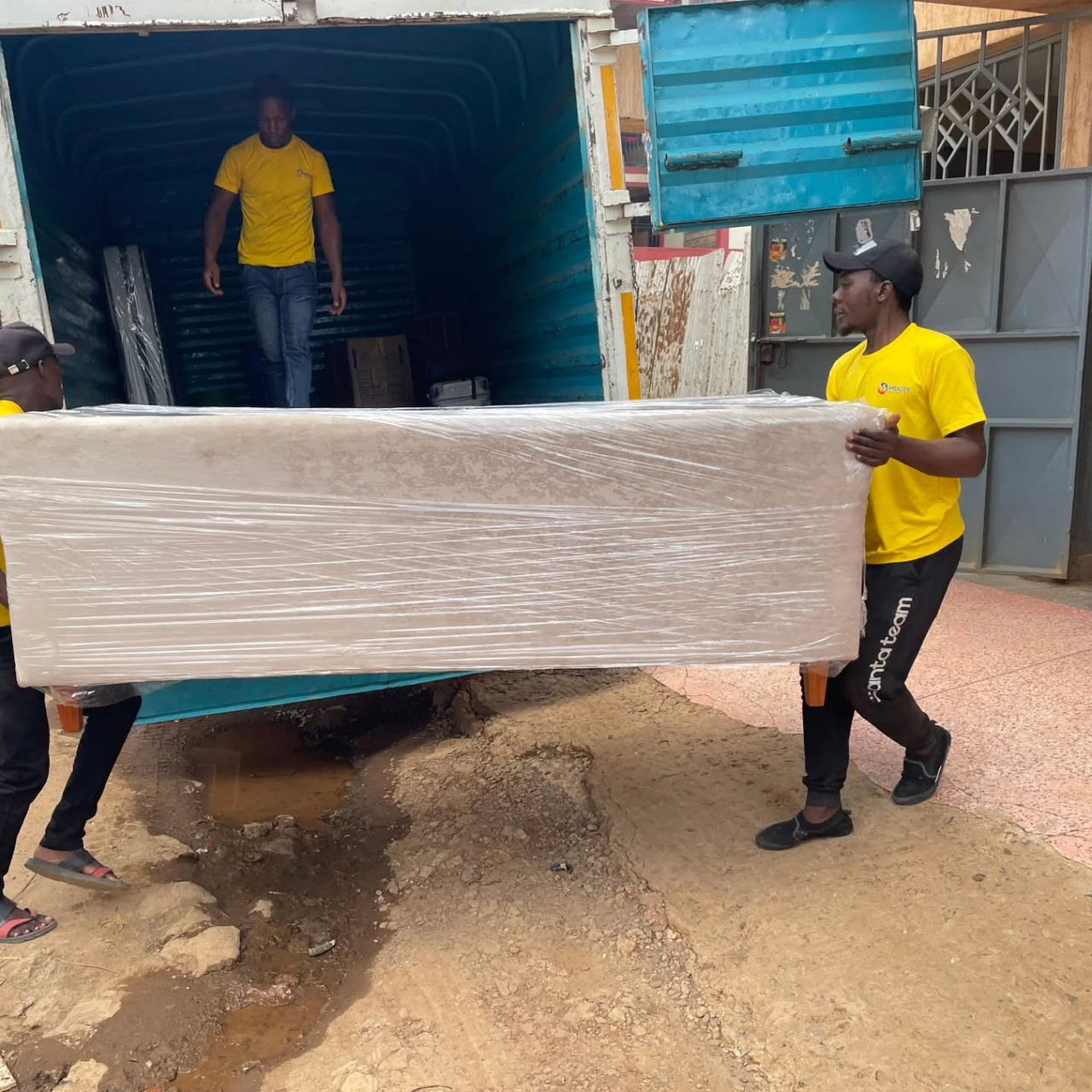
A permanent crew can be vetted, trained, corrected and kept. A crowd hired that morning can only be paid.
The MidCity operating principle
What Actually Makes Us Different
Four things you can check on the day, rather than four adjectives you have to take on trust.
Permanent staff, not casual hires
Everyone who walks into your house is a MidCity employee on the payroll, cleared before being hired and known to us by name. We do not top up a crew with men picked up on the way to the job, and we do not hand your move to another company under our name.
Ask to see the ID badgeOne coordinator who owns the move
You get one person's name and direct number before the truck leaves the yard, and that same person stays with the job from the assessment through to sign-off. No repeating your situation to a new voice each time you call, and no being passed between the office and the crew.
One name, one numberA written inventory at both ends
Cartons and items are listed and marked before loading, and the list is checked against what comes off at the other end. It takes a few extra minutes and it removes the argument entirely — either the count matches or we can see straight away what does not.
Signed by you, not just by usGoods insured while in transit
Every load we carry moves under an active Goods-in-Transit policy, so a road accident or fire on the way is not simply your loss to absorb. It is the difference between a company saying "we will be careful" and a company that has already put cover behind the sentence.
100% of moves coveredWho Turns Up at Your Gate
The crew is the company. Trucks can be hired and cartons can be bought, but the difference between a move that goes quietly and a move that goes wrong is almost always the people carrying the load. So the crew is the part we are slowest to change and strictest about.
Everyone is recruited to stay. We hire for the long term, train in-house, and keep the same teams working together so that lifting a wardrobe down a narrow staircase is a drill they have done together many times rather than something three strangers work out on the spot.
- Vetted before hire A valid Certificate of Good Conduct from the DCI, identity documents verified, and previous employers or referees contacted. Nobody joins a crew before that is complete.
- Trained in the work, not just sent to it Packing and wrapping of glassware, screens and mirrors; safe two-person and team lifting; dismantling and reassembling beds, wardrobes and desks; loading order and tie-down so a load does not shift on the road.
- The yellow shirt is accountability, not branding If a crew member is rude, careless or cuts a corner, you know exactly which company they belong to and exactly who to call. That is the whole point of the uniform.
- No sub-contracting Your move is not sold on to another outfit. The crew that was assessed, quoted and booked is the crew that arrives, and the truck belongs to us.
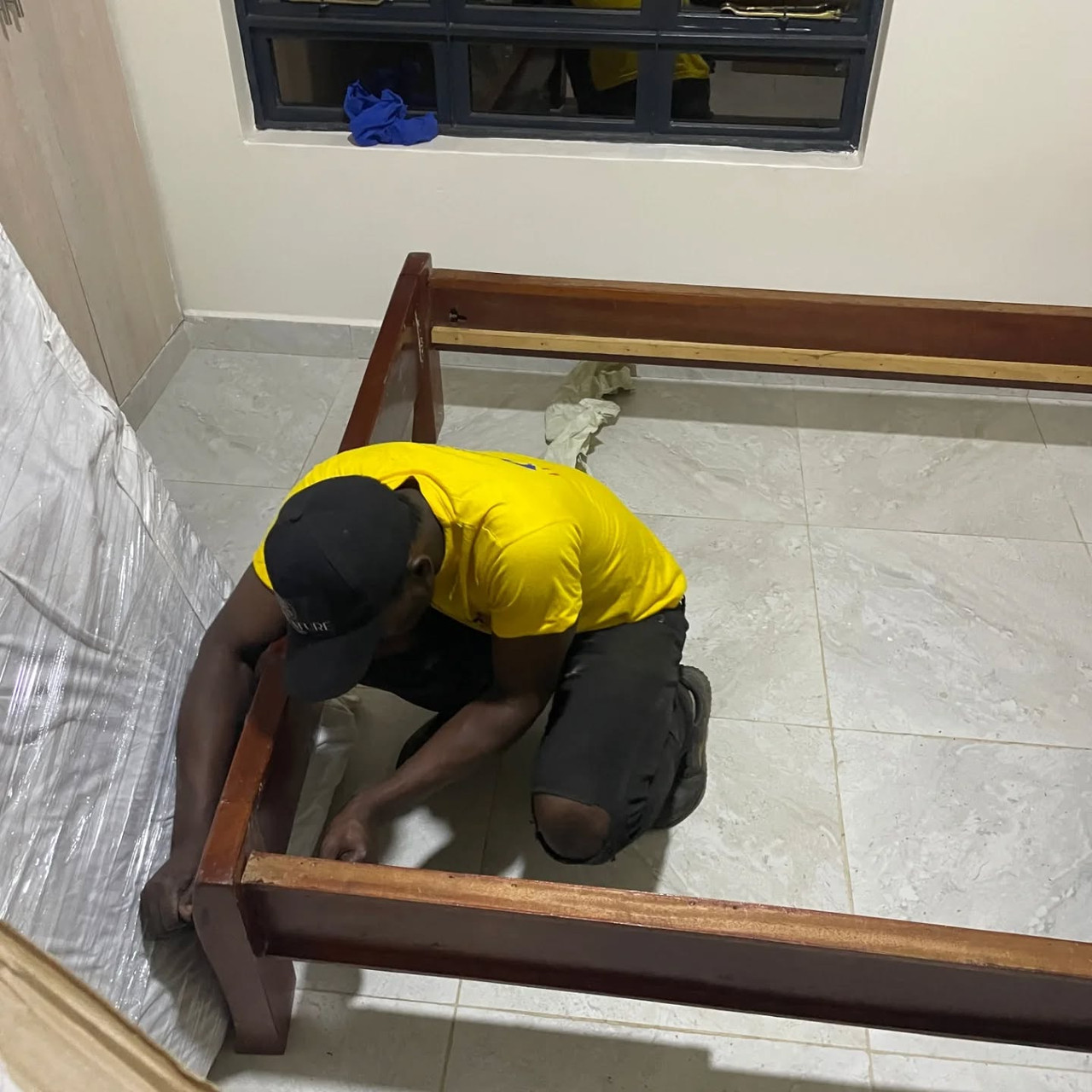
- Conduct in the house Shoes and hands kept off furniture, floors sheeted before work starts, bedrooms and personal effects left alone unless you have asked us to pack them, and the site swept clean before we ask for sign-off.
How the Operation Grew
Each of these started as a complaint, a near-miss or a customer question we could not answer well enough. They are listed in the order we adopted them.
One truck and a permanent crew
MidCity began with a single vehicle and a small team on the payroll rather than a list of numbers to call on the morning of a job.
The uniform became standard
Yellow company shirts and ID badges on every job, so a customer can tell at a glance who belongs on site and who does not.
Written inventory on every move
Items listed and marked at the loading point and checked off at delivery. Introduced after too many disputes that came down to one person's memory against another's.
Goods-in-Transit cover on every load
Insurance moved from something arranged for larger jobs to something that sits behind every single load we carry, household or commercial.
Enclosed bodies replaced open pick-ups
Closed truck bodies became the standard for household loads so that dust, rain and roadside handling stop being part of the risk.
Free pre-move assessments
Every quotation now follows a visit — in person, or by video call where a visit is impractical — because guessing volume over the phone is where mid-move price arguments begin.
Countrywide coverage
What began as Nairobi work now runs to all 47 counties, with long-distance loads secured and strapped for the full route rather than only for the first hour.
Past 5,000 completed moves
Homes, offices, shops, single parcels and pets — the volume that gave us the repeat patterns our checklists are now built from.
From First Enquiry to Sign-Off
The same five steps on every job, whether it is a bedsitter across town or an office moving to another county.
Enquiry
Call or message us with where you are moving from and to, roughly what you have, and your preferred date. We tell you there and then whether we can do it and what we need to see.
Free assessment
A coordinator visits to look at the volume, the access, the stairs, the lift and anything fragile or oversized. Where a visit is not practical, we do the same walk-through on a video call.
Written quotation
You receive the scope, the crew size, the vehicle and the materials in writing before anything is booked. Nothing is added on move day unless you ask for extra work in writing.
Packing and loading
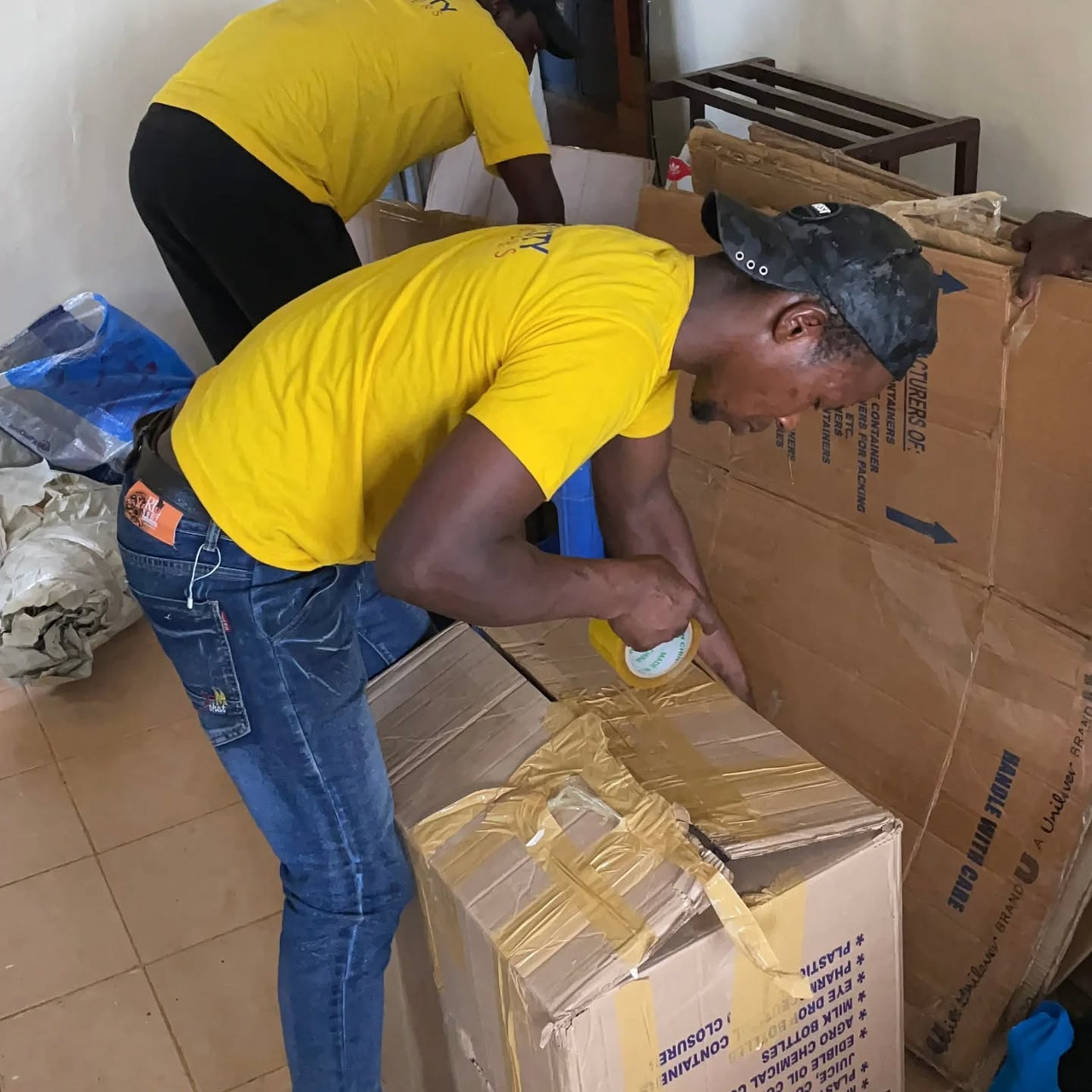
Floors sheeted, fragile items wrapped, furniture dismantled where needed, everything listed and marked, then loaded in order and strapped down before the doors close.
Delivery and sign-off
We unload against the same list, put beds, wardrobes and appliances back together, place things in the rooms you point to, clear the packaging, and only then ask you to sign that the job is complete.
The Principles That Guide
Everything We Do
Three rules our movers, drivers and dispatchers work to on every job, whether it is a bedsitter in Roysambu or an office block in the CBD.
First things first
If we agree to be at your gate at 7:30 in the morning, the truck is there at 7:30, loaded with the cartons and materials your move was quoted for. A start time is a commitment, not an estimate.
On time, as agreedRespect for your belongings
Your furniture is handled the way we would handle our own. Nothing is dragged across a floor, nothing is stacked where it will mark, and nothing is rushed because the crew wants to finish early. There are no shortcuts that you pay for later.
No shortcutsFixed prices, honestly
The figure your coordinator writes down after the site survey is the figure you pay. No renegotiation halfway through the day, and nothing added at the door once the truck is loaded.
Quoted once
How We Train the People
Who Carry Your Things
Every permanent crew member goes through the same five-part programme before they work unsupervised in a customer's home.
DCI background checks
Police background and identity checks on every member of staff before they are hired. A valid Certificate of Good Conduct from the Directorate of Criminal Investigations is a condition of joining a crew, not a formality completed afterwards.
Master handyman training
Wall-mount bracket systems, bed and wardrobe joints, and kitchen water connections, so the crew that takes something apart is the crew that can put it back together properly.
Fragile packing
Bubble-wrap layering, paper folding, corner buffers and double-walled boxes, practised on glassware and screens before anyone packs a customer's kitchen.
Ergonomic heavy lifting
Shoulder dollies and stair straps, and the team lifts that go with them, so heavy items come down a narrow staircase without injury to the crew or damage to the walls.
Customer conduct
A written conduct policy covering language, behaviour in occupied rooms, and respect for family privacy while the crew is in the house.
What We Promise You
Six plain commitments. If we break one of them on your move, say so and we will put it right.
- The price you agree in writing is the price you pay. Nothing is added on move day.
- Only MidCity employees enter your house, and every one of them is vetted and in uniform.
- What goes on the truck is written down, and it is checked again when it comes off.
- Your goods are insured in transit — you are not carrying that risk on your own.
- We finish the job: beds and wardrobes reassembled, appliances reconnected, packaging cleared away.
- If something is damaged, you hear back from us — we tell you what happened and how it is being handled.
Same crew. Same shirts. Same people to call afterwards.